


Silent Hill: Townfall - Staying Silent (Review)


Silent Hill: Townfall
Released: September 24th, 2026
Developer: Screen Burn
Publisher: Konami
Systems: PC, PS5 (reviewed)
Silent Hill: Townfall is a frustrating game, and I don’t mean that in the traditional sense one would call a game frustrating. See, the latest attempt to nail a modern Silent Hill features one of the most promising stories I’ve seen in a horror game, yet it’s told in the absolute worst way possible.
Not to lean too heavily on comparison, but imagine if Silent Hill 2 didn’t tell you who sent James the letter and all we see of the message is a cryptic request to meet in a "special place.” In this absurd version, we don’t know about James’ entire goddamn wife until right near the very end, mere moments before the real twist involving her is revealed. The impact on the story, the aforementioned twist, and the audience’s ability to invest in it would be, in my opinion, catastrophic.
This very catastrophe has occurred with Townfall, a game that spends hours telling you to trust the script, promising it’s going somewhere while it spins its wheels for chapter after chapter. What we do get told upfront has all the components needed to make it the best Silent Hill installment since the PlayStation 2 era, but the writing's insistence on constant implication erects a massive wall between player and plot.
Speaking of which, can writers of every genre please quit it with furtive dialogue that a competent human would only say if they knew an audience was watching? When characters talk to each other in ridiculously vague terms even if everyone in the scene should know what's going on, it couldn’t be more blatant that they’re only hiding it from the viewers. It’s a cheap tactic that can only work if done brilliantly, and no, claiming it’s meant to be dreamlike or surreal doesn’t cut it as an excuse - there's dreamy, and there’s impenetrable.

Set on the Northern UK island of St. Amelia, an American named Simon wakes up with a mucky drip in his arm and a pointlessly ambiguous voice asking him to “make it right." It quickly becomes apparent that the island is almost devoid of all life, having been ravaged by a disaster that killed in droves, caused civil unrest, and led to St. Amelia’s abandonment. For the majority of the story, this is all we learn about Simon’s plight save for some visual and contextual clues. What brought him here, what his motivations are, what his relationship with the very few supporting characters is, these are all things we’re expected to hang on for.
Devoid of personality (like many Silent Hill guys in fairness), he spends most of his time not knowing anything about anything and expressing no opinions beyond being mildly weirded out, so I’m left asking why I should care about him. Unlike the relatable goals of other series protagonists, we’re given nothing to empathize with, no hook that lets me root for the hero, and if you think his narrative shrouding informs the plot in any way, consider this - the cutscene that finally tells you who he is and why he showed up could’ve played at the very beginning of the story, and it wouldn’t have altered the plot in any way. In fact, having that information at the start would not only improve matters, it would make the real revelations so much more impactful.
Townfall has no idea when something should be implicit or explicit, and some terrible calls were made while figuring it out.

Tempting as it is to make this entire review about the script, I should say it’s not too bad a game when taken as a sum of its parts. It has several glaring faults besides my main frustration, but when Townfall scores, it scores big. The atmosphere is off the charts - not only have the British Isles been captured with unparalleled authenticity, the backstory is fantastic, the soundscape is haunting, and the entire thing drips with what I want to term Dread Misery. It can also be scary as all hell in simple yet elegant ways.
Mechanically, Townfall is basic to the point where it could be considered dated. Founded upon the most rudimentary stealth and combat, it often feels like one of the hundreds of first-person horror games you can find on Steam. Sneaking around consists of crouching, peeking, and hiding in closets until something fucks off. Combat’s downright embryonic, giving you the ability to swing a fragile stick, block incoming damage, and that’s it. Later on you accrue some firearms, which do their job as mundanely as everything else.
I know I’ve made it sound boring, but in fairness it occasionally is boring. However, Townfall’s unremarkable gameplay is elevated considerably with a couple of gimmicks that can make a player far too paranoid to worry about a lack of “systems.” How many game mechanics do you need when the primary one serves as both your lifeline and a source of fear? The answer is, “a few more than Townfall actually has,” but believe me when I say the CRTV is a literal game changer.
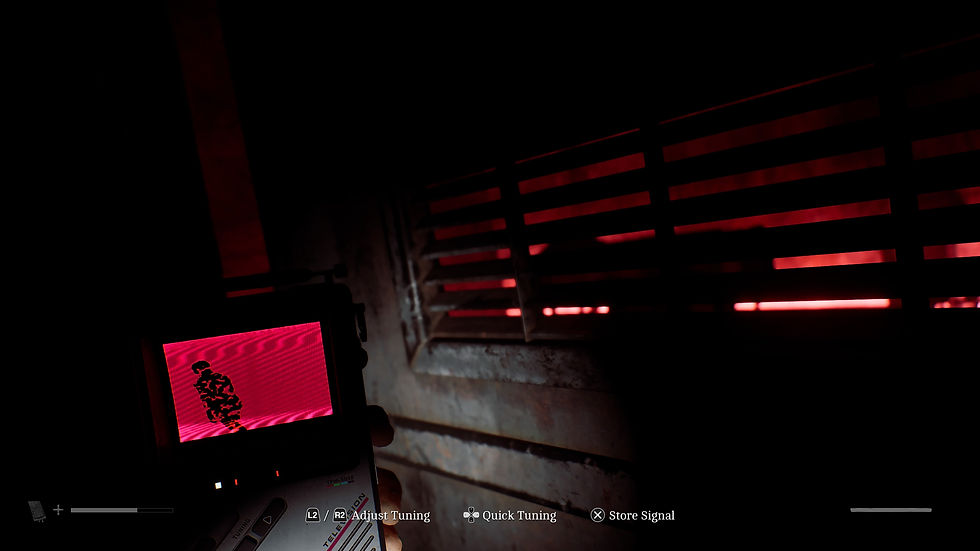
Soon after arriving on St. Amelia, Simon finds an old portable television thingy that can tune into frequencies given off by the island’s monsters, which is already a cool play on the older games’ use of radio interference. Once tuned in, that creature’s silhouette becomes visible on the machine's screen, allowing it to be tracked through any visual obstruction. Caveats include enemies being displayed in a red void that obscures their precise surroundings, as well as having to keep the CRTV trained on the target to follow it on a very small screen. Perhaps the biggest downside is how it may only tap into one signal at any given moment.
Curiously, being able to see a monster scurrying around in real-time makes me feel less safe than if I didn’t know where it was, which is really down to pure psychology. You carry a constant reminder of present danger, and there’s something horrifying about hiding from an enemy while while it suspiciously investigates the wardrobe you're in, all viewable on a little screen. One particular antagonist serves as a recurring stalker, and the way it moves is 100% meant to make it look scarier on the CRTV - the first time I saw its staticky silhouette slow down, take a few steps back, and quietly creep the way it came in an effort to sneak up on me, I was unnerved to say the least. It’s pure theater, a prebaked animation creating the illusion of cleverness in lieu of sophisticated AI, but it did just enough to cause concern.
I didn’t initially like the restriction on tracking multiple frequencies, but I have to appreciate how well it helps in fueling the scariness. You can’t watch any single threat without leaving the others to their own devices, and since bringing up the monitor sends everything else into a naturalistic soft focus, you’re all the more disadvantaged against whatever might ambush you. When the CRTV suddenly reveals that there are half a dozen nearby signals at once, it can really test your nerves.
Praise aside, the CRTV could really use some work. You have to manually tune into a frequency the first time it appears, scrolling slowly as you move the dial to the correct position. You can jump instantly between them once you’ve tuned in, but since each enemy is represented on the tuner as a little dot, mentally keeping track of which signal pertains to what becomes a hassle. These dots aren’t arranged according to range or relevance either - they’re randomly scattered, so two nearby enemies can be on opposite ends with a faraway non-factor placed right next to one of them. Dangers completely irrelevant to your current situation will invariably serve as clutter, which is more inconvenient than it is scary.
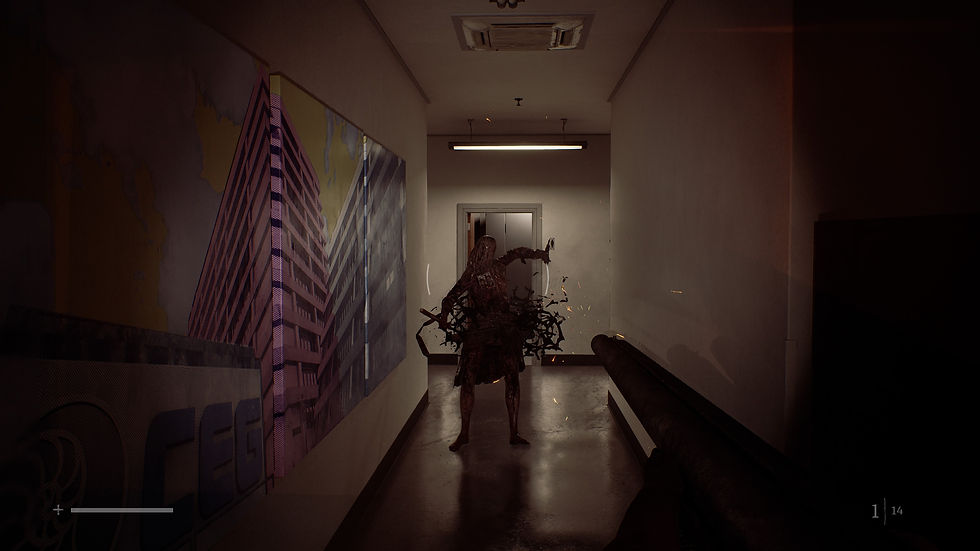
Combat is barely worth expounding on. As I noted, your only options are attacking or blocking, and fighting is practically turn-based as a result of how offense is sequentially traded back and forth. Melee weapons, rare as they are, are brittle enough to make a Hylian sword look tough, and when they unceremoniously break you have no ability to defend yourself. A dodge move would have been useful considering the most common enemy type attacks with an absurdly long cord that sometimes passes through walls and is guaranteed to carve off a chunk of health while you’re trying to run away.
Simon immediately revives himself from death if a fresh IV bag is equipped, but he does this right where he died with a fraction of his HP (unless you have an upgraded bag) while the monsters that got him are still standing there - great fun if you're tagged by an instakilling fucker! Even more egregiously, if you retreat into a phone box for safety your range of motion becomes too limited to look at whatever chased you, so you have to bloody guess when it’s safe to come out. Both these scenarios make the game feel clumsily designed, like nobody thought about how such poor implementation is unfit for purpose.

As well as our “main” character, Townfall occasionally puts us in the shoes of someone else. Zoe’s a nurse who’s wracked with self-hatred over her perceived failure to save lives during the disaster, and as far as I’m concerned she should have had the lead role. She’s got a clear and direct relationship with the story, we’re shown how she feels about the situation she’s in, and any mysteries associated with her manage to intrigue rather than infuriate as a result. I’ve very few complaints about her chapters except for some tedious puzzles/chores, but those run throughout the whole campaign. We’ll get to them.
Zoe gets a pager instead of the CRTV, which can only provide broad directional indicators to help her avoid trouble. It’s a lot less precise but it highlights the rough position of multiple enemies at once, which I personally found a lot more useful for stealthing. Later, a third character is stripped of even that, relying instead on pure firepower as he fends off assassin-like Widows rushing at him from the darkness. Both these gameplay styles highlight one of Townfall’s best elements - an ability to find new ways of creating anxiety in its audience.
I’m impressed by how the scare tactics change from chapter to chapter, introducing something new to worry about in each one. From persistent pursuers to a sea of monstrous corpses that hide indistinguishable beasts in plain sight, each fresh problem helps to squeeze extra mileage from material that otherwise wouldn’t keep a player hooked for very long.
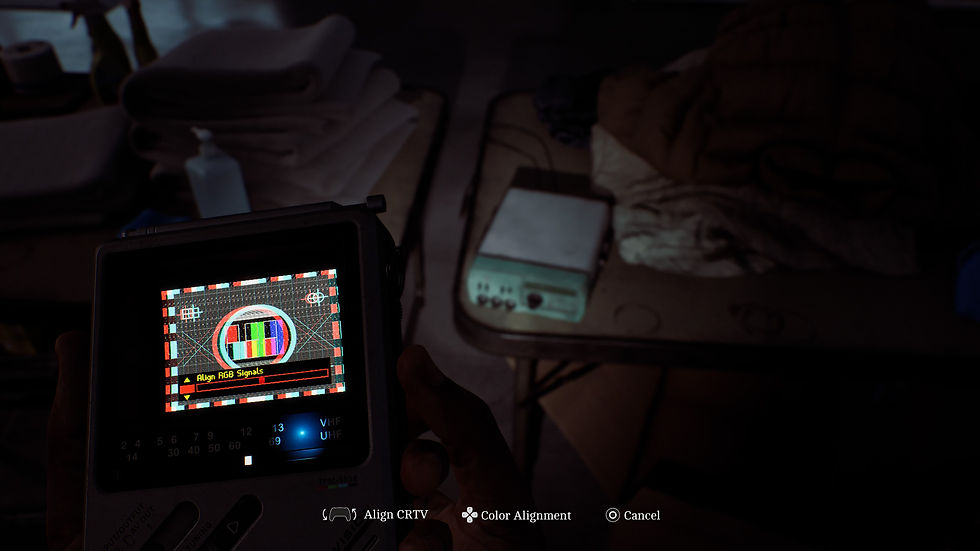
Puzzles aren’t as consistently gripping, they’re an assortment of the clever and the dull. You’ve got some really cool ones, such as an item hunt that has you sort of time travel to explore multiple versions of a house, but then you have puzzles so fucking long-winded and rote they’re going to put me off replaying the whole thing in future. Anything involving computers or machine components is a pain in the ass, requiring you to slowly look from object to object in order to interact with them, laboriously backing in and out of various interfaces. Like many other mechanics in this game, there are far better ways of doing it.
Certain puzzles are just cases of “guess what the developer was thinking.” A particularly egregious one is a whiteboard drawing that uses arrows to hint at a keypad code - you’re expected to follow these arrows on the actual pad, except the image is misleadingly drawn like shit and I will not accept “realism” as an excuse for it. Towards the finale, you’re burdened with a task so lengthy and full of guesswork it practically kills any interest in the campaign, arriving immediately after you’ve been given a reason to care about Simon at last. When puzzles are bad, they’re the worst part of the game, and there aren’t many I’d consider good.

As you might be able to tell, I have wildly conflicting feelings on this release. My complaints are numerous and strong, yet I’ve been highly impressed by Townfall's genuine examples of masterclass-level horror design. It consistently does a lot with a little, which I can respect.
Visually, this is the most authentic looking Silent Hill game since Team Silent was at work. I want this developer to have another crack of the whip because I hope to see what they could do with the full run of Silent Hill's namesake town. Ugly in the most beautiful way, all the depressing greys and rusty browns are a treat for the eyes despite how utterly drab they ought to be. When St. Amelia’s take on the Otherworld floods in, environments are bathed in a harsh red that makes everything look like hell itself. There are places where the red is cut into by equally bold blue lighting, evoking the image of emergency sirens, and it’s truly stunning. I’m also pleased with the monster designs, although there aren’t nearly enough of them to keep the menagerie feeling fresh.
By far the most astounding thing about St. Amelia is how accurately it reflects the British Isles. Brutalist housing estates and quaint village squares are populated with appropriate furnishings, all authentically reflective of both the UK and the 1990s (gotta love those beige electronics). They replicated the phone boxes in which you save to an exquistive degree, the phone’s buttons are so clacky I can feel them and there’s a perfect amount of filth on those bumpy metal interiors - I don’t want to touch anything in those phone boxes, which is exactly how it should be. As a millennial Brit, a homely nostalgia accompanies Silent Hill’s horror, brought about by an incredible level of detail that speaks to a deep love on the part of the artists.
What a shame that a release with moments of true brilliance has to come with a laundry list of caveats.
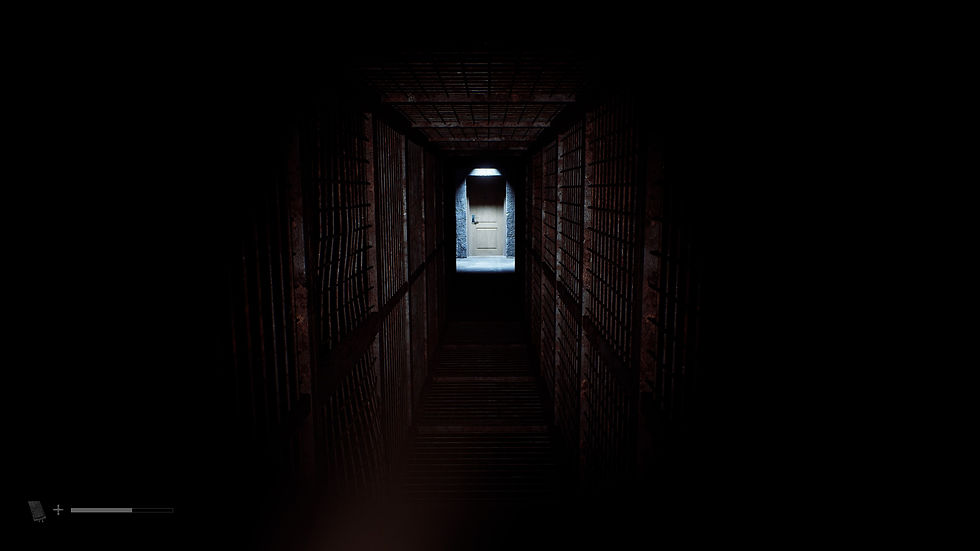
Silent Hill: Townfall exasperates with a story that’s obtuse in all the wrong ways and gameplay that occasionally just doesn't work. At the same time, it delivers genuinely scary sequences and demonstrates a clear respect for Silent Hill’s stylistic trappings, at times being able to make my shoulders tense up like rocks. When Townfall’s good it’s fucking good, but when it’s not, it’s more likely to be clumsy, frustrating, or just plain boring.
The question, however, is whether or not it has enough going for it to be considered good on the whole, and that’s an assessment I had been hemming and hawing on since I started playing.
Then the last act of the game kicked in and wore out my patience, so I’m settling on “it’s alright mostly.”
6.5/10
